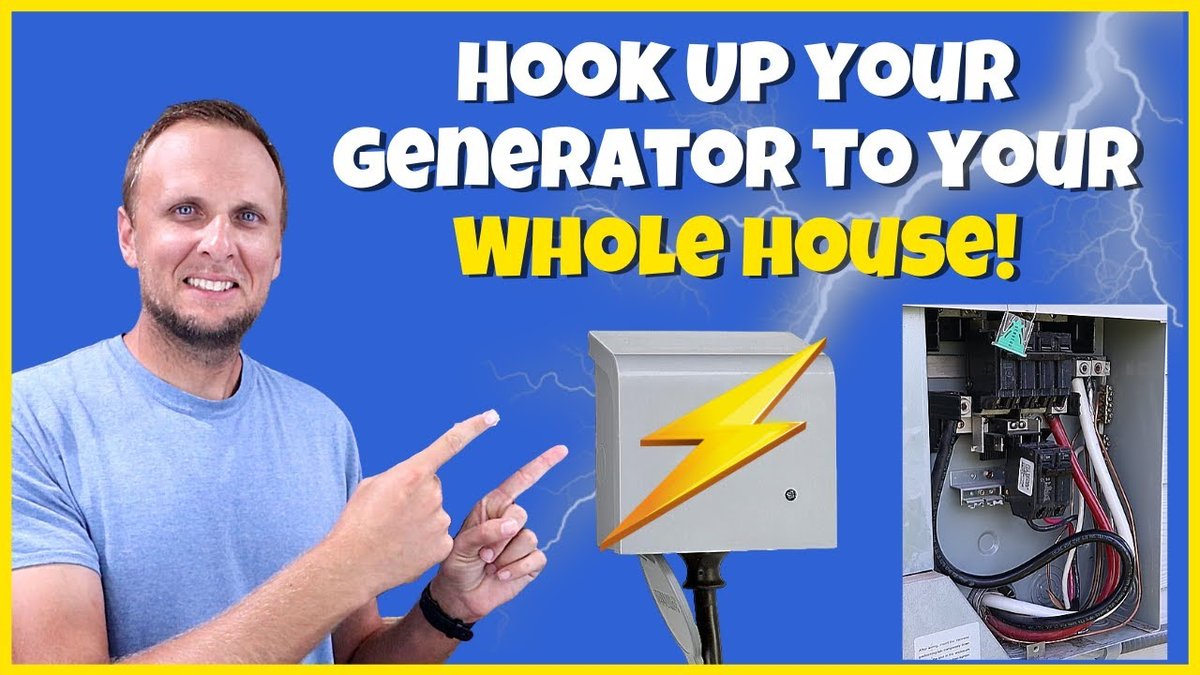
Power outages can strike at any moment, plunging your home into darkness and disrupting daily life. From keeping your food cold to powering essential medical equipment or maintaining critical work-from-home setups, a home generator offers peace of mind. But connecting a generator to your house isn't just about plugging it in; it's about doing it safely and legally. Improper connection can lead to deadly consequences, not just for you but for utility workers.
This comprehensive guide will walk you through everything you need to know, ensuring you can power your home responsibly when the lights go out. We'll explore generator types, critical safety protocols, essential equipment, and step-by-step connection methods.
Understanding Your Power Backup Needs: Portable vs. Standby Generators
Before you even think about connecting a generator, it's crucial to select the right type for your home and lifestyle. The two main categories are portable and standby generators, each with distinct advantages and limitations.
Portable Generators: Flexible Power When You Need It
Portable generators are a popular choice for many homeowners. They're typically more affordable, ranging from $500 to $2,000, and offer power outputs from 3,000 to 8,000 watts. These units are designed to be moved, stored away when not in use, and are great for occasional outages, camping, or powering tools on a job site.
However, they require manual starting and refueling, can be quite loud, and are generally only sufficient to power a few essential items like a refrigerator, some lights, and a phone charger. If you experience infrequent outages and only need to keep critical appliances running, a portable generator might be your ideal solution.
Standby Generators: Automatic Whole-Home Reliability
For those who face frequent or extended power disruptions, or who have specific needs like medical equipment, a standby generator offers superior convenience and power. These units typically cost between $3,000 and $15,000 (plus installation) and provide 8,000 to 20,000+ watts.
Standby generators are permanently installed outside your home and connect directly to your existing gas line. They activate automatically within seconds of a power outage, seamlessly restoring power to your entire home or pre-selected circuits. While they require professional installation and regular maintenance, their automatic operation and higher power output offer unparalleled comfort and reliability.
The Absolute Non-Negotiables: Generator Safety First
Regardless of the type of generator you choose, safety must be your top priority. Ignoring proper procedures can have catastrophic and even fatal consequences.
The Lethal Danger of Backfeeding
Backfeeding is the most critical hazard when connecting a generator to your home. This occurs when electricity from your generator flows back into the utility grid. If a utility worker is repairing lines they believe to be de-energized, they could be electrocuted. Backfeeding can also damage your home's electrical system, bypass safety features, and cause fires.
Crucially, using a "male-to-male" cord (often called a "suicide cord") to plug your generator directly into a wall outlet is illegal in all states and incredibly dangerous. It's a direct path for backfeeding. Never, ever attempt this. To delve deeper into essential practices and understand the critical dos and don'ts, we highly recommend you Prioritize generator safety for yourself and your community.
The Invisible Killer: Carbon Monoxide (CO) Poisoning
Generators produce carbon monoxide (CO), an odorless, colorless, and deadly gas. CO poisoning is a silent killer, and it's responsible for numerous generator-related fatalities each year.
Always operate your generator outdoors. Place it at least 20 feet from your home, making sure it’s away from doors, windows, and vents to prevent exhaust fumes from entering your living spaces. Never run a generator in a garage, basement, shed, or any other enclosed area, even if the doors are open. For added protection, install carbon monoxide detectors throughout your home, especially near sleeping areas.
The Safe & Legal Way to Connect: Transfer Switches and Interlock Kits
To safely connect a generator to your home's electrical system and prevent dangerous backfeeding, you must use a specialized connection device. These systems effectively isolate your home from the utility grid, ensuring your generator's power only flows into your home circuits. Understanding these options is the first step in Choosing Your Home Generator System Select the best fit for your specific needs.
Transfer Switches: The Gold Standard for Home Backup
A transfer switch is a device that completely disconnects your home from the utility grid before allowing generator power to flow in. This physical separation is the safest and most recommended method.
- Manual Transfer Switches ($300-$600 plus installation): These require you to manually flip switches to isolate the grid and select specific circuits you want to power with your generator. They offer excellent control over which appliances receive power.
- Automatic Transfer Switches ($500-$1,500 plus installation): Primarily used with standby generators, these detect power outages and seamlessly switch your home's power source from the utility to the generator, then back again when utility power is restored – all automatically.
Generator Interlock Kits: A Cost-Effective Whole-Home Alternative
An interlock kit is a mechanical device that physically prevents you from turning on both your main utility breaker and your generator breaker simultaneously. Installed directly onto your main electrical panel, it ensures that your home cannot be connected to both power sources at once, thereby preventing backfeeding.
Interlock kits are typically more affordable ($50-$150) than transfer switches and can provide whole-house power (within your generator's capacity). However, they require careful manual operation and must be specifically designed to fit your electrical panel. Professional installation is mandatory for both safety and code compliance.
The Power Inlet Box: Your Generator's Connection Point
A power inlet box ($50-$150) is a weatherproof exterior receptacle installed on your home's exterior wall. This is where you plug your generator into your home's electrical system using a heavy-duty generator cord. Bottom-mount inlets are often preferred for better weather protection, keeping moisture out.
Essential Tools and Equipment for a Safe Hookup
Beyond the generator and connection system, you'll need several other items to ensure a safe and effective setup:
- Generator: Sized appropriately for your power needs (check continuous and peak wattage).
- Connection System: A manual or automatic transfer switch, or a generator interlock kit (with matching electrical panel).
- Power Inlet Box: For a safe and weatherproof exterior connection.
- Heavy-Duty Generator Cord: A specialized cord designed for your inlet box and generator, rated for outdoor use and sufficient gauge (e.g., 10-gauge or thicker for high-power).
- Extension Cords: For direct appliance connection, use only heavy-duty, outdoor-rated cords (10-gauge or thicker for high-power appliances). Avoid daisy-chaining.
- Tools for Installation: Screwdrivers, wire strippers/cutters, non-contact voltage tester, drill, hammer, tape measure, mounting hardware.
- Safety Gear: Insulated gloves, safety glasses, closed-toe shoes, and a reliable flashlight or headlamp for working in the dark.
- Carbon Monoxide Detectors: Absolutely essential for inside your home.
Step-by-Step: How to Connect Your Generator
There are a few primary ways to connect a generator to your house, ranging from simple direct connection to more integrated, whole-house solutions. As you explore these methods, you'll want to Understand generator connection options to find the best fit for your home.
Method 1: Direct to Appliances (Extension Cords)
This is the simplest method, requiring no electrical work, suitable for powering a few critical items directly.
- Placement is Key: Position your generator outdoors, at least 20 feet from your house. Ensure it's on dry, level ground, away from doors, windows, and vents. Protect it from rain with a generator tent or canopy, ensuring proper ventilation.
- Prepare the Generator: Check the oil level and fill the fuel tank. Start the generator and let it run for 2-3 minutes to warm up and stabilize.
- Connect Appliances: Using heavy-duty, outdoor-rated extension cords, connect essential appliances one by one. Run cords through open doors or windows, taking care not to pinch them. Prioritize items like your refrigerator, a few lights, and phone chargers. Do not overload the generator's wattage capacity.
Method 2: Via a Transfer Switch (Recommended for Managed Power)
This method offers safe, organized power to selected circuits. For the initial installation, it's strongly recommended to hire a licensed electrician, as it involves working with your main electrical panel and typically requires permits and inspections.
- Install the System (Professional Step): A licensed electrician will install the transfer switch near your main electrical panel, connecting it to the specific circuits you've chosen to power during an outage. They will also install the exterior power inlet box.
- Prepare the Generator: Place your generator safely outdoors, as described above. Ensure it's filled with fuel and oil.
- Connect Generator to Inlet Box: With your generator running and stable, connect it to the exterior power inlet box using the appropriate heavy-duty generator cord.
- Transfer Power:
- Turn off your home's main utility breaker. This completely disconnects your house from the grid.
- Flip the transfer switch to the "generator" position.
- Turn on the individual circuit breakers on the transfer switch for the appliances you wish to power, one by one, to avoid overwhelming the generator with a sudden surge.
- Monitor your generator's load and avoid exceeding its capacity.
- Restore Power: Once utility power returns, turn off all generator-powered circuits on the transfer switch, then flip the transfer switch back to the "utility" position. Finally, turn your main utility breaker back on.
Method 3: Via an Interlock Kit (Affordable Whole-House Option)
An interlock kit provides a whole-house power solution, but it also demands meticulous operation. This system, like a transfer switch, requires professional installation by a licensed electrician to ensure it correctly matches your electrical panel and adheres to all local codes.
- Install the System (Professional Step): A licensed electrician will install the interlock kit directly onto your main electrical panel, along with the exterior power inlet box.
- Prepare the Generator: Place your generator safely outdoors, ensuring it's fueled and oiled.
- Connect Generator to Inlet Box: With your generator running and stable, connect it to the exterior power inlet box using the heavy-duty generator cord.
- Transfer Power Safely:
- Turn off all individual branch circuit breakers in your main electrical panel.
- Turn off your main utility breaker.
- Slide the interlock device to the position that allows the generator breaker to be turned on.
- Turn on the dedicated generator breaker.
- Now, you can turn on your essential circuits one by one, monitoring the total load to stay within your generator's wattage limits.
- Restore Power: When utility power is restored, first turn off all individual branch circuit breakers. Then, turn off the generator breaker. Slide the interlock device back to its original position. Finally, turn your main utility breaker back on, and then selectively restore your branch circuits.
It's highly advisable to practice the entire connection and power-transfer process before an actual power outage occurs. This familiarization will make the process smoother and safer under stressful conditions.
DIY or Professional? The Installation Decision
While connecting a generator directly with extension cords is a DIY task, installing a transfer switch or an interlock kit is a different story. These systems involve modifying your home's main electrical panel, which carries significant risks if not done correctly.
- When to DIY: For direct appliance connection using extension cords, you can absolutely do it yourself, provided you follow all safety guidelines for generator placement and operation.
- When to Hire a Professional: For any installation involving your home's electrical panel – specifically, the installation of a transfer switch or an interlock kit – always hire a licensed and qualified electrician. This ensures the work is done safely, adheres to all local building codes, and passes any necessary inspections. Attempting this complex electrical work yourself without proper training can be extremely dangerous and could void your home insurance. To make an informed decision and understand the nuances, explore more on DIY or professional generator installation.
Mastering Your Home's Power Needs: Understanding Electrical Load
One of the most common mistakes is overloading the generator. To avoid this, you need a clear understanding of your home's electrical load. This involves knowing the wattage requirements of your appliances and managing them effectively.
- Continuous vs. Peak (Surge) Watts: Generators have two wattage ratings:
- Running (Continuous) Watts: The power an appliance needs to operate steadily.
- Starting (Surge) Watts: The extra burst of power many motor-driven appliances (like refrigerators, well pumps, or air conditioners) need for a few seconds when they first turn on. This can be 3-4 times their running wattage.
- Calculating Your Needs:
- List all the essential appliances you want to power.
- Find their running wattage (usually on a label or in the manual).
- Identify appliances with motors and note their surge wattage (or estimate by multiplying running watts by 3 or 4).
- Add up the running watts of all simultaneously running appliances, then add the highest single surge wattage to determine your total required capacity.
- Load Management Plan: Prioritize. Start with the largest surge-wattage items first, then add smaller items. Use a wattage meter if you have one to monitor real-time usage. This careful approach to Understanding Home Electrical Load & will prevent tripped breakers and generator damage.
For a typical home running essential circuits (refrigerator, lights, furnace fan, phone charging), a 5,000-7,500 watt portable generator often suffices. For more extensive needs, or to power things like a central AC unit or electric water heater, you'd likely need a 10,000+ watt standby generator.
Beyond Connection: Operating and Maintaining Your Generator
A generator is an investment that requires ongoing care to ensure it's ready when you need it most.
Fuel Management
- Storage: Store fuel in approved, clearly labeled containers (red for gasoline, yellow for diesel) away from living spaces and heat sources.
- Stabilizer: Add fuel stabilizer if storing gasoline for more than 30 days.
- Rotation: Rotate fuel every 3-6 months. Gasoline older than 6 months can degrade and harm your generator. Diesel with additives can last up to a year.
Monthly Testing
Run your generator for 20-30 minutes once a month under a light load (e.g., a few lights, a small fan). This keeps engine parts lubricated, cycles fuel, and helps identify potential issues. Check the oil level before each test run and listen for any unusual noises. Keep a maintenance log.
Proper Shutdown Procedure
To ensure longevity and safety:
- Remove all electrical loads first. Turn off all appliances and disconnect extension cords or flip off circuit breakers on your transfer switch/panel.
- Let the generator run unloaded for 2-3 minutes to cool down its internal components.
- Switch the generator to the "off" position.
- If your generator has a fuel valve, close it.
- Allow the unit to cool completely before storing it.
Avoiding Common Mistakes: A Quick Recap
- Never Backfeed: Reiterate: No "suicide cords" or plugging into wall outlets. Always use a transfer switch or interlock kit.
- Prevent Carbon Monoxide Poisoning: Generators are for outdoor use only. At least 20 feet from the house, away from openings. Install CO detectors.
- Don't Overload: Know your generator's wattage limits. Start appliances one by one. Have a load management plan.
- Regular Maintenance: Check oil, fuel, filters, and spark plugs. Test run monthly. This prevents inconvenient breakdowns during critical times.
Frequently Asked Questions
- Do I need a permit for a transfer switch? Yes, typically. Installing a transfer switch or interlock kit involves modifying your home's electrical system and usually requires permits and inspections from your local building department. Ignoring these can void your home insurance.
- How big of a generator do I need for my house? For essential circuits (refrigerator, lights, furnace fan, TV), 5,000-7,500 watts often suffice. For more extensive whole-house power including AC or an electric water heater, you'd generally need 10,000+ watts, usually from a standby unit. Always calculate your specific needs.
- Can I run my generator in the rain? Standard portable generators are not designed for direct exposure to rain due to electrocution hazards. You must use a generator tent, cover, or a protected, well-ventilated canopy to shield it from moisture while maintaining proper airflow.
- How often should I test my generator? Test run your generator for 20-30 minutes under load once a month. If you have an automatic transfer switch, perform a full transfer test quarterly.
- Can a portable generator power my whole house? Most portable generators (3,000-8,000 watts) cannot power an entire modern home, especially if you want to run major appliances like central air conditioning or electric water heaters. They are best for prioritizing essential circuits via a transfer switch or interlock kit. For true whole-house power, a larger standby generator (10,000+ watts) with an automatic transfer switch is usually necessary.
By following these guidelines and understanding the critical importance of safety, you can confidently hook up your generator to your house. Preparing now will ensure that when the power goes out, your home remains a haven of comfort and functionality.