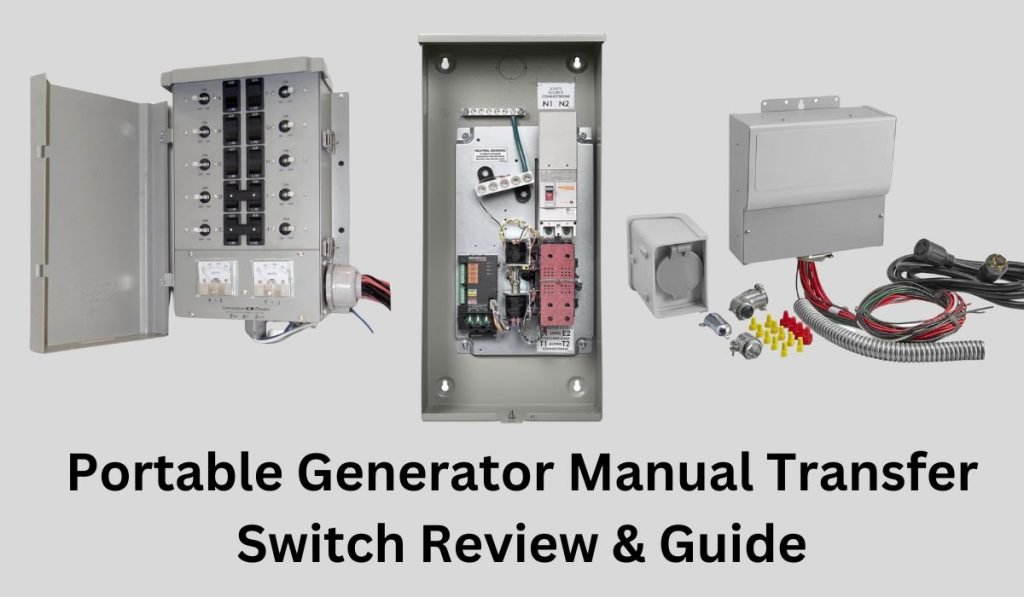
Power outages are more than just an inconvenience; they can disrupt daily life, compromise food safety, and even pose safety risks. While a simple extension cord setup can power a few essentials, true resilience comes from a more integrated solution. This Step-by-Step Guide to Portable Generator Hookup (Manual Transfer) Safely will walk you through securing your home's vital circuits during an outage, giving you the power to keep your lights on, your fridge cold, and your family comfortable. We'll demystify the process of wiring a manual transfer switch (MTS) to your home's electrical panel and operating your portable generator safely and effectively.
It's a project that demands respect for electricity, but with the right knowledge and a commitment to safety (and often, a licensed electrician), you can ensure your home is ready for whatever comes its way.
At a Glance: Your Path to Reliable Backup Power
- Size Your Generator First: Before anything else, calculate your essential appliance wattage to choose the right generator.
- Understand the Manual Transfer Switch (MTS): This device safely connects your generator to your home's electrical panel, preventing dangerous "backfeeding."
- Identify Critical Circuits: Decide which circuits (e.g., fridge, furnace, lights) you absolutely need powered during an outage.
- Professional Installation Recommended: Installing the MTS involves working with your home's main electrical panel. Many municipalities require a licensed electrician for this.
- Safety is Paramount: Always turn off main power before touching wiring, and never connect or disconnect generator cords with the generator running.
- Operate Systematically: Once installed, operate your generator and transfer power circuit by circuit to avoid overloads.
Why a Manual Transfer Switch is Your Best Bet for Portable Generators
When the grid goes dark, a portable generator can be a lifesaver. But how do you get that power from the generator to your home's lights, refrigerator, or furnace? Many homeowners consider running a tangle of extension cords, but this approach quickly becomes impractical, cumbersome, and limited. For a more robust and safer solution, a manual transfer switch (MTS) is the answer.
A manual transfer switch is a dedicated electrical panel installed next to your main service panel. It allows you to select specific circuits in your home to receive power directly from your portable generator, bypassing the utility lines. This setup transforms your portable generator from a simple appliance charger into a whole-house (or critical-circuit) power solution. It's a significant step up in convenience and safety when connecting a generator to your home.
The Critical Role of a Transfer Switch: Preventing Backfeed
The most vital function of an MTS is safety—specifically, preventing what's known as "backfeed." Backfeeding occurs when generator power flows backward from your home's electrical system into the utility company's lines. This is incredibly dangerous for utility workers who might be trying to restore power, as they could be electrocuted by the unexpected live current.
A manual transfer switch completely isolates your home from the utility grid when it's running on generator power, eliminating the risk of backfeed. Without an MTS, directly plugging a generator into a wall outlet or using an unsafe method to energize your panel is not only illegal in most places but also life-threatening.
Manual vs. Automatic Transfer Switches: A Quick Distinction
While this guide focuses on manual transfer switches, it's worth noting their counterpart: automatic transfer switches (ATS). An ATS automatically detects a power outage, starts your generator, and transfers power to your home without any human intervention. They are typically used with larger, permanently installed standby generators.
For portable generators, a manual transfer switch is the common and cost-effective choice. It requires you to manually start the generator and flip switches to transfer power, but it provides the same critical safety isolation as an ATS.
Before You Buy: Sizing Your Generator & Identifying Critical Loads
Before you even think about installation, you need a clear plan for what you want to power and how much power that will require. This crucial planning stage will dictate the size (wattage) of the portable generator you need and the configuration of your manual transfer switch.
Calculating Your Needs: Running vs. Surge Watts
Generators are rated by their wattage, usually expressed in "run watts" (or "continuous watts") and "surge watts."
- Run Watts: This is the power needed to keep an appliance operating steadily.
- Surge Watts: Many appliances, especially those with motors (like refrigerators, well pumps, or air conditioners), require a higher burst of power for a few seconds when they first start up. This is their "surge wattage."
You don't necessarily need a generator that can handle the surge wattage of all your desired appliances simultaneously, as you'll likely stagger their startup. However, your generator's surge rating must be able to handle the highest single surge you expect.
Here’s how to calculate your generator size:
- List Critical Appliances: Decide which appliances and circuits are absolutely essential during an outage. Think about:
- Refrigerator and/or freezer
- Furnace blower (if applicable)
- Sump pump
- Some lights (at least one circuit)
- Television/router (for information/communication)
- Medical equipment (if critical)
- A few outlets for charging phones or small appliances
- Find Running Wattage: Look for wattage stickers on your appliances or consult their manuals. If only amperage (amps) is listed for 120-volt items, multiply amps by 120 (Volts) to get approximate watts (Watts = Volts x Amps). For 240-volt items, multiply amps by 240.
- Sum Running Wattages: Add up the running watts of all the items you want to power simultaneously.
- Consider Surge Wattage: Identify the appliance with the highest surge wattage among your critical items. This often includes things like refrigerators or furnaces, which can have startup watts 2-3 times their running watts. While not strictly necessary to sum all surge watts, ensure your generator's surge capacity can handle this largest single startup.
- Apply a Safety Factor: To find the minimum generator wattage, sum your desired load wattages and multiply by 1.25. This gives you a buffer.
Example Calculation:
- Refrigerator: 750 watts (running)
- Furnace Fan: 1,500 watts (running)
- Sump Pump: 1,000 watts (running)
- Lights (10 bulbs @ 60W each): 600 watts (running)
- TV & Router: 400 watts (running)
- Total Running Wattage: 750 + 1500 + 1000 + 600 + 400 = 4,250 watts
- Multiply by 1.25 safety factor: 4,250 * 1.25 = 5,312.5 watts.
- Recommendation: A 5,000-7,500 watt portable generator would be suitable, keeping in mind the largest surge load.
Common Appliance Wattage Guidelines
| Appliance | Running Wattage (Approx.) | Notes |
|---|---|---|
| Refrigerator | 750 W | Can surge to 2,000+ W at startup |
| Forced Air Furnace | 1,100 - 1,500 W | Blower motor, can surge higher |
| Incandescent Light | 60 W (per bulb) | LEDs significantly lower |
| Sump Pump | 800 - 1,000 W | Motorized, high surge at startup |
| Garage Door Opener | 550 - 1,100 W | Motorized, high surge |
| Television | 300 W | Modern LCD/LEDs can be lower |
| Microwave (Small) | 600 - 1,000 W | Consumes full wattage when operating |
| Coffee Maker | 800 - 1,500 W | Heating element, full wattage when brewing |
| Well Pump | 1,000 - 2,000 W | Critical for homes relying on well water; high surge |
| Router/Modem | 10 - 30 W | Very low draw, essential for communication |
| Portable standby generators typically output 5,000 to 7,500 watts. Larger stationary generators can provide 10,000 to 20,000 watts (10 to 20 kilowatts) or more. For most critical-circuit needs, a portable generator in the 5,000 to 7,500-watt range is often sufficient. |
Generator Sizing by House Size (General Guide)
While specific calculations are always best, here’s a rough guide for whole-house standby generator sizing by home square footage:
| House Size (sq ft) | Recommended Generator Size (kW) |
|---|---|
| Up to 2,700 | 5 - 11 kW |
| 2,701 - 3,700 | 14 - 16 kW |
| 3,701 - 4,700 | 20 kW |
| 4,701 - 7,000 | 42 - 47 kW |
| Remember, portable generators are not designed for whole-house power in larger homes, but rather for selecting critical circuits. If you’re looking to power a substantial portion of a larger home, you might consider a larger, permanently installed system beyond the scope of a portable setup. |
Getting Ready: Tools and Materials (and When to Call a Pro)
Before any wires are touched, gathering your tools and understanding the scope of the work is essential. This is where we emphasize a critical point: while we provide detailed steps for the manual transfer switch installation, many municipalities require that this work be performed by a licensed electrician. Non-professional installation may also void warranties and could pose significant safety risks if done incorrectly. When considering connecting a generator to your home, always prioritize safety and compliance.
Tools You (or Your Electrician) Will Need:
- Voltage tester (non-contact and/or multimeter) – absolutely critical for safety
- Screwdrivers (Phillips and flathead)
- Wire strippers/cutters
- Pliers (lineman's, needle-nose)
- Adjustable wrench
- Hacksaw (if conduit needs trimming)
- Electric drill with appropriate bits (for mounting the switch)
- Level
- Measuring tape
- Circuit tracer (optional, but very helpful for identifying circuits)
- Wire connectors (e.g., yellow wire nuts)
Materials (Typically included with the MTS, but good to know): - Manual Transfer Switch (MTS) kit (including the switch box, pre-wired conduit, and circuit breakers)
- Locknut and bushing (for securing conduit to main panel)
- Appropriate gauge generator power cord (matching your generator's outlet and the MTS inlet)
When to Call a Pro (Which is Most of the Time):
Installing a manual transfer switch involves direct interaction with your home's main electrical panel. Even with the main breaker off, certain parts of the panel remain energized. Miswiring can lead to electrocution, fire, or damage to your home and generator. - Complex Wiring: If you're not fully comfortable identifying circuits, handling high-voltage wiring, or understanding electrical codes, call a professional.
- Local Codes: Many jurisdictions mandate that all electrical work, especially involving the main panel, be performed by a licensed electrician and inspected. Check with your local building department.
- Safety: A qualified electrician ensures the installation is safe, compliant, and correctly wired, protecting your home and family.
- Warranties: Some generator and MTS manufacturers may void warranties if installation isn't done by a certified professional.
This guide provides the knowledge for how it's done, which empowers you to understand the process, make informed decisions, and oversee the work if you hire a professional. If you choose to undertake this yourself, proceed with extreme caution and only if you are fully competent and compliant with all local regulations.
The Installation Journey: Wiring Your Manual Transfer Switch (Professional Recommended)
This section details the steps for installing a pre-wired manual transfer switch next to your main service panel. As reiterated, this work should ideally be performed by a licensed electrician. These steps assume you have a pre-wired MTS kit that comes with the necessary conduit and wires.
Safety First: Always De-Energize!
Before you touch anything inside your electrical panel, ensure the power is OFF. This is not a suggestion; it is a mandatory safety measure.
- Turn off the Main Power Breaker: Locate the main circuit breaker in your electrical service panel and switch it to the OFF position. This disconnects power to all circuits in your home.
- CAUTION: Even with the main breaker off, the large terminals where the utility power enters the main breaker remain energized. These are extremely dangerous. Do not touch them. Use a non-contact voltage tester to verify circuits are dead before proceeding.
Step-by-Step Installation:
- Map Your Critical Circuits:
- Inside your main electrical panel, you'll see a diagram or labels for each circuit. Refer to your earlier planning to identify the specific 120-volt and 240-volt circuits (e.g., refrigerator, furnace, specific lights) that you want the generator to power.
- Match Circuits to Your MTS:
- Your pre-wired transfer switch will have a series of circuit inlets/breakers. Match your designated critical household circuits with these inlets, aiming to balance the load as evenly as possible between the two "legs" (sides) of the transfer switch if it's a 240-volt unit.
- Double-pole (240-volt) circuits will require two 120-volt connections on the MTS, often indicated by a handle tie. Ensure 15-amp and 20-amp circuits on your MTS align with your home's circuit breakers.
- Prepare the Main Panel Knockout:
- At the bottom or side of your main service panel box, select a "knockout" (a pre-scored hole) that matches the size of the connector on the flexible conduit coming from your transfer switch. Remove it carefully with a screwdriver and hammer.
- Feed Wires Through:
- Carefully feed the wires from the flexible conduit of the transfer switch into the knockout hole you just created in the main service panel. Take extreme care not to nick or damage the insulation on any of the wires. These wires will be clearly labeled by circuit, corresponding to your MTS.
- Secure the Conduit:
- Using a locknut and bushing, securely attach the flexible conduit from the transfer switch box to the main service panel. This provides physical protection for the wires and ensures a safe connection.
- Mount the Transfer Switch Box:
- Position the transfer switch box on the wall next to the main service panel. A common guideline is to have its closer edge about 18 inches from the center of the main service panel, allowing ample working space and clear access. Secure it firmly to a wall stud or with appropriate anchors.
- Connect 120-Volt Circuits (Hot Wires):
- Starting with the first critical 120-volt circuit:
- Carefully remove the breaker for that circuit from the main service panel.
- Disconnect its hot wire (usually black or red) from the breaker.
- Locate the red wire from the corresponding transfer switch circuit (it will be labeled). Attach this red wire to the terminal on the circuit breaker you just removed.
- Reinstall the circuit breaker back into the main service panel.
- Now, locate the black wire from the same transfer switch circuit. Twist this black wire together with the original hot wire you disconnected from the breaker using an appropriate wire connector (e.g., a yellow wire nut).
- Tuck all wires neatly back into the panel.
- Repeat this process for all subsequent 120-volt critical circuits.
- Wiring 240-Volt Circuits:
- For 240-volt critical circuits (e.g., well pump, furnace), these typically require a double-pole breaker (a single breaker with two handles, usually connecting to two adjacent hot bus bar terminals).
- Remove the double-pole breaker from the main service panel and disconnect both hot wires.
- Attach the two red leads from the two corresponding transfer switch circuits to the double-pole breaker terminals.
- Reinstall the double-pole breaker.
- Take the two black wires from the same transfer switch circuits and twist each one with the original hot wires you removed from the double-pole breaker. Use separate wire connectors for each connection.
- Ensure these two circuits on the MTS are adjacent and, if necessary, connected with a handle tie. (Many pre-wired 240V circuits in an MTS already have this built-in).
- Connect Neutral Wires:
- Locate the large white neutral wire coming from the transfer switch conduit.
- Attach this white neutral wire to an available opening in the neutral bus bar in your main service panel. The neutral bus bar is typically a metal bar with many white wires connected to it.
- Connect Ground Wires:
- Locate the green ground wire coming from the transfer switch conduit.
- Attach this green ground wire to an open port on the grounding bar (also a metal bar, often with bare copper or green wires connected).
- Final Touches & Panel Cover:
- Double-check all connections to ensure they are secure and correctly wired.
- Carefully replace the cover on your main service panel box.
- Fill in the circuit map on your transfer switch box, clearly labeling which circuit corresponds to which switch on the MTS. This is crucial for safe and efficient operation during an outage.
Bringing it to Life: Operating Your Portable Generator with an MTS
Once your manual transfer switch is professionally installed and inspected, you're ready to learn how to operate your system safely during an outage. Remember, safety always comes first. This guide aims to help you understand connecting a generator to your home through a manual transfer switch.
Pre-Start Checklist for Your Generator
Before an outage hits, ensure your generator is ready:
- Fuel: Have a fresh, adequate supply of fuel (gasoline, propane, or natural gas) stored safely. Use fuel stabilizer for gasoline if storing long-term.
- Oil: Check the oil level according to your generator's manual.
- Maintenance: Ensure your generator has been regularly maintained (spark plug, air filter, etc.).
- Placement: Position your generator outdoors in a well-ventilated area, away from windows, doors, and vents, to prevent carbon monoxide poisoning. Never run a generator indoors or in a garage.
- Cord Check: Inspect your generator power cord for any damage.
Step-by-Step Operation During an Outage
- Prepare the Transfer Switch:
- Ensure all circuit switches on the manual transfer switch are set to the "LINE" position (meaning they are connected to utility power, or awaiting it).
- Ensure your main circuit breaker in the service panel is in the OFF position. While the MTS isolates, this is an extra layer of safety.
- Connect the Generator to the MTS:
- CRITICAL SAFETY WARNING: Always attach the power cord from the generator to the switch box before starting the generator. Never attach or detach a generator cord with the generator running. This can damage the generator, the cord, or cause serious injury.
- Plug the appropriate generator cord into your generator's power outlet and then firmly into the outdoor inlet box that connects to your manual transfer switch.
- Start the Generator:
- Follow your generator's specific startup procedure (e.g., open fuel valve, set choke, pull start or electric start).
- Let the generator run for a minute or two to warm up and stabilize its voltage and frequency before applying a load.
- Transfer Power, Circuit by Circuit:
- Go to your manual transfer switch panel.
- Flip each circuit switch from "LINE" to "GEN" one at a time.
- Avoid turning all circuits on simultaneously. This prevents a large surge that could overload and trip your generator.
- Try to maintain balance by alternating between circuits connected to the left side and right side of the transfer switch (if it's a 240-volt unit). This helps distribute the load evenly across the generator's output.
- Monitor any onboard wattage meters on your generator or transfer switch to keep power levels in balance and avoid exceeding your generator's capacity. Start with your most critical items first (e.g., refrigerator, furnace, essential lights).
- Monitoring Your Power:
- Listen to your generator. If it sounds strained or bogs down, you might be overloading it. Turn off some non-essential circuits.
- Regularly check fuel levels.
- Ensure proper ventilation for the generator.
Shutting Down Your System Safely
When utility power is restored, or you need to shut down your generator:
- Disconnect Loads from Generator:
- Go to your manual transfer switch.
- Flip all activated circuit switches from "GEN" back to "LINE" one at a time. This transfers the circuits back to utility power (if available) or simply disconnects them from the generator.
- Shut Off the Generator:
- Let the generator run for a few minutes with no load to cool down.
- Follow your generator's specific shutdown procedure (e.g., turn off the engine, close the fuel valve).
- Disconnect the Power Cord:
- Once the generator is completely off and silent, safely disconnect the power cord from both the generator and the outdoor inlet box. Store it properly.
- Restore Main Breaker:
- Flip your main circuit breaker in the service panel back to the ON position. Your home is now fully on utility power.
Common Questions & Smart Answers
Can I install a manual transfer switch myself?
While this guide provides the technical steps, it's highly recommended that a licensed electrician perform the installation. Working inside your main electrical panel is dangerous and often requires permits and inspections to comply with local electrical codes. Incorrect installation can lead to electrocution, fire, or damage to your home and appliances.
What about just using extension cords?
Extension cords are suitable for powering individual, small appliances directly from the generator. However, they are not designed to power entire circuits like your furnace or hardwired lights. Using too many extension cords creates trip hazards, can overload cords not rated for the load, and offers no protection against backfeeding into your utility lines. A manual transfer switch is a far safer and more practical solution for powering home circuits. For more on safe power solutions, you might review options for connecting a generator to your home.
How often should I run my generator?
Most manufacturers recommend running your generator under a light load for 20-30 minutes once a month. This "exercise" helps keep the engine lubricated, prevents fuel system components from gumming up, and ensures it's ready when you truly need it.
What's the difference between 15-amp and 20-amp circuits for an MTS?
The amperage rating refers to the maximum current a circuit can safely handle. Your home has a mix of 15-amp and 20-amp circuits. The manual transfer switch will have corresponding circuit breakers. It's crucial not to mismatch them. For example, don't try to connect a 20-amp home circuit to a 15-amp breaker on the transfer switch, as this could lead to nuisance trips or, worse, safety issues.
What is 'backfeeding' and why is it so dangerous?
Backfeeding is when electricity from your generator flows backward from your home's electrical system into the utility company's power grid. This happens if your home is not properly isolated from the grid during generator operation. It's incredibly dangerous because it can energize utility lines that workers believe are de-energized, leading to severe injury or electrocution for those attempting to restore power. A manual transfer switch completely prevents backfeeding by creating a physical disconnect between your home and the utility grid.
Beyond the Hookup: Maintenance & Best Practices
Installing your generator and manual transfer switch is a significant step towards energy independence during an outage. But the journey doesn't end there. Regular maintenance and smart practices ensure your system is always ready when the lights go out. To optimize your readiness for any power disruption, understanding all aspects of connecting a generator to your home is key.
Fuel Storage and Management
- Fresh Fuel: Gasoline can degrade and cause engine problems. Use fresh fuel, and consider a fuel stabilizer if you're storing gasoline for more than a month or two.
- Safe Storage: Store fuel in approved containers in a cool, dry, well-ventilated area, away from living spaces and heat sources. Never store fuel inside your home.
- Propane/Natural Gas: If using a propane or natural gas generator, ensure tanks are filled and lines are regularly inspected.
Generator Exercise
As mentioned, regular exercise (running your generator for 20-30 minutes under a light load once a month) is crucial. This keeps the engine healthy, confirms operability, and helps you become familiar with the startup and shutdown procedures.
Regular Inspections
- Generator: Visually inspect your generator periodically for damage, leaks, or loose connections. Check oil levels before each use.
- Transfer Switch: Ensure the transfer switch is clean, free of debris, and that its switches operate smoothly.
- Power Cord: Inspect your generator power cord before and after each use for cuts, fraying, or damaged prongs. Replace it immediately if any damage is found.
Carbon Monoxide Detectors
Always install battery-operated carbon monoxide detectors in your home, especially if you use a generator. Carbon monoxide is an invisible, odorless, deadly gas produced by generators. Even with proper outdoor placement, a detector provides an essential layer of safety.
Keep Records
Maintain a log of generator run times, maintenance performed, and fuel purchases. This helps you track performance, anticipate maintenance needs, and ensures you have a reliable history of your equipment.
Your Power, Your Peace of Mind
Navigating power outages with confidence begins with a well-planned, safely installed, and properly operated backup power system. This comprehensive guide to portable generator hookup with a manual transfer switch equips you with the knowledge to make informed decisions, understand the installation process, and safely manage your home's power during an emergency.
Whether you tackle the planning yourself or bring in a professional for the electrical work, prioritizing safety and adherence to best practices will ensure your family remains comfortable and secure, no matter what the grid throws your way. Invest the time now, and enjoy the peace of mind when the next storm rolls in.